
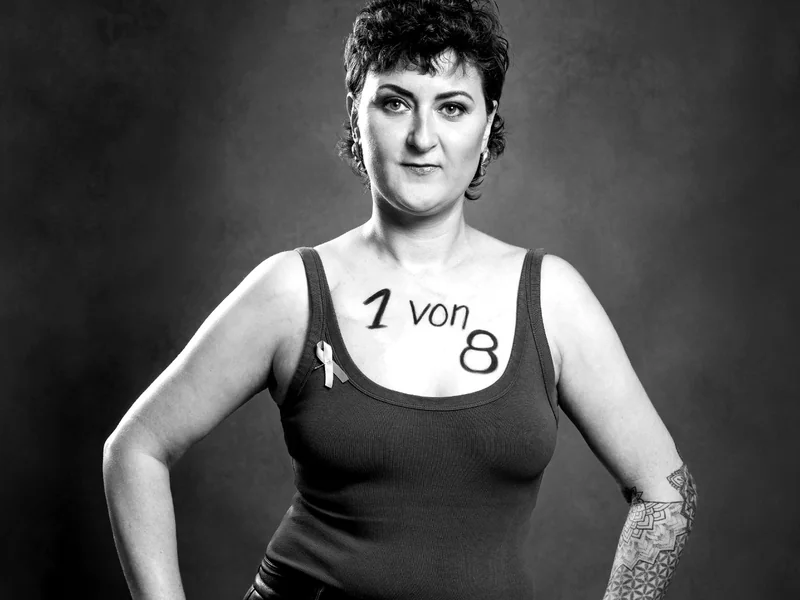
For me, photography means more than just an assignment. It creates encounters, preserves stories, and can enable people to see themselves in a new light. At inVISIBLE, this idea is given a special framework. The project accompanies people during and after cancer therapy. The focus of the portraits is on the person in front of the camera: with their expression, their personality, and what they want to show of themselves. The illness is part of the context, but it should not be the sole defining factor of the portrayal.
What inVISIBLE is about
The professional courage-boosting photoshoots form the photographic foundation of unSICHTBAR. They are free of charge for the participants. The project aims to create spaces in which people can engage with a changed image of themselves and see themselves through different eyes. Current offers and information on participation are described by unSICHTBAR on its project website (external website, opens a new tab).
The word courage-booster describes an intention, not a predetermined state of mind. Anyone standing in front of the camera does not have to appear particularly confident or show a specific development. A portrait can be calm, open, or reserved. The significance of the images does not increase by telling a story that is as unambiguous as possible.
What is important to me is to keep photographic possibilities and personal experience separate. An image can spark something or become important to a person. How it is actually experienced cannot be determined in advance. There is no expression with which the effect of such an appointment would have to be proven.
My connection to the project
I accompany unSICHTBAR as a photographer and, together with initiator Sabine Fiedler, Franziska, and make-up artist Stephanie Reckling, belong to the first-hour team. What unites us is a conviction that also shapes my personal portrait photography: It is not about the illness. It is about the human being.
For me, this sentence means looking closely without reducing a person to the occasion of the encounter. The camera focuses on a person, not on a general idea of what an experience is supposed to look like. This requires the same attention that is important to me in other portrait contexts.
The illness is not ignored by this. It explains the framework within which the project operates. However, it does not have to determine every decision regarding gaze, posture, or visual impact. There is an important difference between knowing about a situation and attributing a finished story to it.
A person is allowed to be more than the occasion
People bring interests, relationships, humor, reserve, and much more with them. A portrait does not have to be able to show this diversity completely. It may focus on one expression while leaving open what else belongs to the person. This openness is not a lack of statement.
Even a smile does not allow for a definitive statement about how someone is experiencing their situation. A calm gaze is just as little a clear sign of sadness. The photographic representation and the actual personal experience are connected, but not identical.
In the post Showing people without defining their story it is about this respectful handling of images. Especially a specific project context should not lead to providing every shot with the most moving interpretation possible. The person remains more important than the story that others want to see in the image.
Craftsmanship and attention belong together
An attentive approach is essential, but it does not replace photographic composition. Light, background, and framing influence how a person appears in the image. Clear guidance can help find a suitable posture. At the same time, the person's feedback remains important.
The composition should not demand assuming a specific role. A portrait can have dignity and presence without needing grand gestures. Stillness can be just as sustainable as an open expression. It is about carefully developing a portrayal rather than applying a finished image type to different people.
The editorial on Craft, Attitude, and Encounter describes this connection. At unSICHTBAR, it exists within a special framework. The photographic task nevertheless remains concrete: portraying a person attentively and with professional care.
Do not turn images into messages without being asked
When portraits are shown in the context of a project, accompanying words shape their perception. A caption can explain where a photograph was taken. However, it should not claim any personal development that has not been stated by the person themselves and intended for this context.
Known information is not automatically information that should be published with every image. Personal backgrounds require careful handling. Which images and statements may be used must be clarified separately. This article describes a photographic attitude, not a legal clearance.
Restraint here does not mean distance from the person. It can precisely be an expression of respect. An image may stand on its own without outsiders knowing all the background details. Its meaning for the photographed person does not depend on how completely others have it explained to them.
Find information directly at the project
If you want to get to know unSICHTBAR or are interested in an offer, the project website is the right starting point for up-to-date information. Dates, participation, and the specific organization are explained there. This journal post is not a separate registration and does not guarantee an available spot.
Participation in the project differs from the commercial portrait offering by Fotografie Anne On my Engagement page I present this connection as well as the differently created encounter with the Dr. Ute Wolski FoundationBoth have their own purpose.
What connects them for me is the view of the human being. Photography can be an occasion to look closer and get in touch with each other. It does not need to tell a complete story for this. Sometimes its strength lies precisely in giving a person space without pinning them down to an explanation.
To the journal overview