
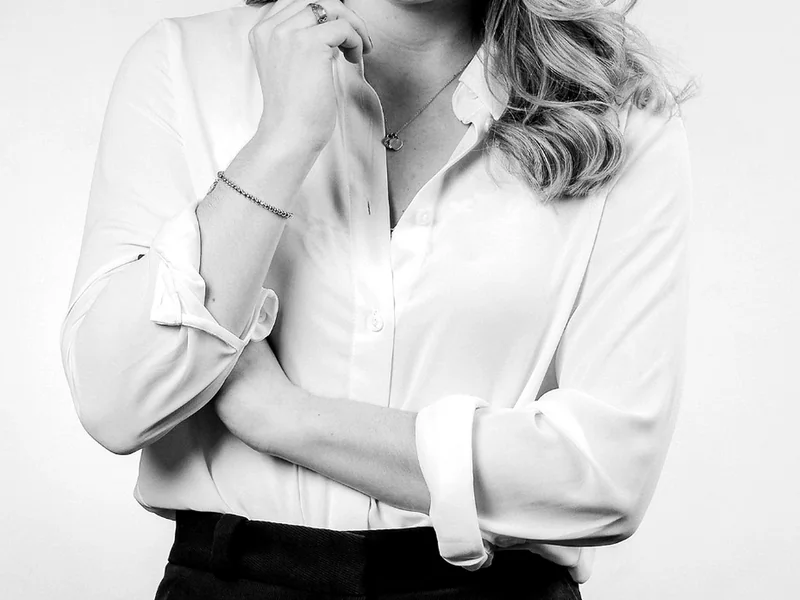
Before a photoshoot, a lot can be prepared: clothing, travel, image preferences, and questions about the process. This can make the appointment easier. However, it does not have to mean looking different beforehand, practicing gestures, or rehearsing a certain effect. Preparation should take work off your hands and not turn you into a new task yourself. A personal portrait does not require a transformation.
Distinguishing between practical questions and self-correction
It makes sense to check if a piece of clothing fits well. It is quite another thing to think that you must first change your own body for photos to be possible. Similarly, a location idea can be helpful, while searching for a perfect pose can quickly lead you away from your actual desire.
Ask yourself the purpose of every preparation step. Does it help to organize the appointment or to make the image concept understandable? Or does it arise mainly from the worry that you are not yet ready to be photographed? This distinction can shorten a long list of supposed obligations.
You are allowed to try something new if you want to. A different style can be part of the image concept. However, it should remain your wish and not be considered a prerequisite for deserving a good portrait. The shots should be oriented towards the person, not towards an ideal version that must be created beforehand.
Familiar clothing as a starting point
Start with things you feel naturally comfortable in. Check if they fit the intended use. A personal portrait and an application photo can have different frames without you having to appear completely different each time.
Do not just try the combination while standing. Sit down, turn around, and move your arms. A collar that constantly needs adjusting or a jacket that only fits in one posture can be distracting during a photo shoot. Such practical problems can often be solved with a suitable alternative.
For professional shots, the contribution to Clothing for the application photo can help. For personal pictures, other preferences may take center stage. In both cases, extensive shopping is not a necessary preparation. A few consciously chosen options are usually clearer than a large, disorganized selection.
A photo request does not have to be a finished photo series
Perhaps you only know that you like quiet portraits. Or you would like to appear less formal than in existing pictures. That is already a direction. You do not yet have to decide what the background, lighting, and framing should look like in detail.
Some examples can help if you use them to name specific characteristics. Do you like the closeness, the lighting mood, or the understated expression? The person photographed is not a template you have to become. A reference image should facilitate the conversation, not reinforce a comparison with a stranger's face.
If you like very different pictures, choose the most important ones first. Not every idea has to be implemented within one session. A clear direction creates space instead of filling the process with many independent wishes.
Do not work through a list of rules in front of the camera
You do not need a collection of instructions for hands, shoulders, chin, and smiling. Tips on posture and gaze are part of the photographic guidance. Understandable orientation can help without you having to control every detail yourself.
If a pose is uncomfortable or does not suit you, say so. Feedback is part of the collaboration. A position can be changed or a different idea can be tried. It is not about holding a pose flawlessly for as long as possible.
The article Looking natural without memorizing poses explains this side of the appointment. A consciously designed portrait can look natural. Naturalness does not mean that the photographer withdraws from the design and you have to figure everything out on your own.
Personal boundaries can simply be stated
Perhaps you do not want very close-up shots or feel uncomfortable in a busy public place. Perhaps you want to keep the images private at first. Such points should be able to be brought up without you having to provide an extensive justification.
Practical needs are also important: specific routes, seating options, or time constraints. Describe what is relevant for the planning. The underlying personal story does not automatically have to become part of the conversation. A concrete requirement can also be understood without many private details.
The sooner important conditions are known, the more specifically it can be checked which framework fits. This is more sensible than a general promise that every situation can be solved spontaneously on-site. Good preparation takes the concrete seriously.
Know the organizational framework
Meeting point, agreed scope, and clothing options to bring along should be clear before the appointment. Ask if something is missing. You do not have to guess a complete plan from individual pieces of information. For an appointment at the studio, it helps to look at the travel route in good time instead of searching for the location just before.
You can find the studio in the Leopoldpassage in Bad Soden. If specific access conditions are crucial, please clarify them beforehand. A planned route should match the actual situation. Even for outdoor shots, the location and handling of changing conditions are part of the concrete coordination.
The Orientation guide connects these practical steps with the inquiry and image selection. It is not a list of additional obligations, but an overview of which decisions are helpful and when.
Arriving at the appointment as yourself
Preparation is successful when the most important questions have been clarified and your attention is no longer focused on many open details. You do not have to feel completely certain. You are allowed to be curious, have questions, or not yet know exactly which shot you will like best later.
On the page about personal portraits you will find my approach. For an inquiry, a clear request is sufficient. You bring the person it is about. The photographic work consists of finding a suitable frame for this – not in turning you into a different person beforehand.
To the journal overview