
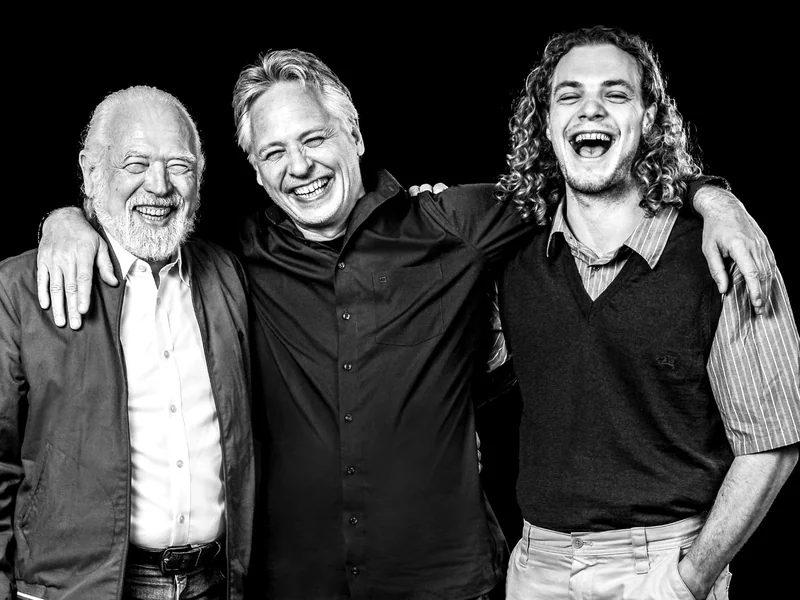
A team page looks more cohesive when its portraits belong together. For this, people do not need to adopt the same pose or smile in the same way. Uniformity is primarily created through photographic decisions: lighting, background, perspective, and framing. Within this framework, the individual person may remain recognizable. The goal is a coherent representation of the company, not a series of interchangeable faces.
First, look at the future side-by-side arrangement
A single portrait can be convincing and yet stand out in a team overview. Perhaps the head is depicted significantly larger, the background is brighter, or the distance to the camera is different. In a small image area, such differences are sometimes perceived more strongly than in the full file.
Therefore, show the actual team page or a planned layout during the planning phase. Will the portraits be cropped square, portrait, or round? Are they placed close together or with a lot of space? Is there an additional larger view? This information influences how much space the shot needs around the person.
If the layout is not yet finished, the basic image areas should at least be coordinated. Photography cannot be reliably prepared for every conceivable future crop. A few clear requirements help more than the request to make everything possible just to be safe.
What the series can connect
A similar background creates coherence. Equally important is how the light falls across the face and clothing. Perspective, image height, and the position within the frame give the series a recognizable order. These decisions do not have to look strict; they can also support a friendly, understated visual language.
Consistent presentation does not mean forcing every person into the exact same geometric position. Different body heights, hairstyles, and postures require creative attention. What matters is the effect in the finished image, not an identical instruction given to all participants.
It pays off to establish a clear direction before production. If it is only decided after many shots that all portraits are needed tighter or significantly brighter after all, the available material can reach its limits. A common line should therefore not be created only when inserting the files into the website.
Where people are allowed to remain different
An open laugh does not suit every person in every situation. A calm gaze is not automatically distant. The way someone stands or holds their shoulders can also vary. These differences do not need to be removed for the images to be recognizable as a series.
I tailor my guidance to the individual. Some need concrete orientation for their posture, others rather a small correction. A uniform pose, on the other hand, can cause individual people to appear tense or unnatural. In the article on photographic accompaniment it is about this combination of design and feedback.
The portraits should not have to prove any traits. Neither teamwork nor professional competence can be reliably deduced from a certain facial expression. The pictures can introduce people clearly and carefully. What they achieve professionally belongs additionally in the actual information about their work.
Clothing as a common framework
For a team, understandable guidance that leaves enough room for maneuver is helpful. "Please dress professionally" can be understood in very different ways. An agreement on how formal the pictures should look and what role work clothing or corporate colors play is more concrete.
The guideline should fit the actual professional everyday life. Not every person needs a suit, and deliberately casual clothing is not automatically more approachable. Different roles can remain visible as long as the overall effect is consciously coordinated.
Also check patterns, large prints, and striking details in relation to the series. A dominant color can be intentional. If it only appears by chance on one person, it may draw a disproportionate amount of attention. The question is not whether color is allowed, but what effect it has in the joint presentation.
Organize selection and approval in advance
Who decides on the photographic direction? Who coordinates feedback? How are the photographed employees involved? These questions are part of the preparation. Without clear responsibility, very different wishes can pull at the same series afterwards.
One person might want a wider crop, another a different background, a third a significantly different edit. Such preferences do not have to be ignored. However, it helps to distinguish between personal image selection and the agreed foundations of the series. Otherwise, a jointly produced set of portraits will once again result in an inconsistent collection.
The planned usage and the necessary agreements for it also belong before the images are deployed. A photographic selection does not replace clarifying the framework of use. Record organizational and design decisions in such a way that the responsible persons can refer back to them later.
Involve new employees from the very beginning
A team rarely remains unchanged. If additional portraits are needed later, a consistent visual language makes continuation easier. This includes existing sample images, the actual crops, and information about the previous shooting location. The article on complementing a portrait series describes what is helpful for this.
Not every series can be exactly replicated under changed conditions. This should be kept open during planning. However, a calm, well-founded approach provides a better foundation than a visual impact driven only by a random room or short-term design trend.
In the business planning guide you will find the connection to deployment, location, and procedure. For an inquiry regarding Business photography viewing your team page and some existing portraits will help. This allows us to discuss what should connect the images and where the people within them are naturally allowed to remain different.
To the journal overview